Inquire

Showing posts with label games. Show all posts

11 February 2014

Learning key concepts in a game-based, de-graded classroom


One of the questions I am most often asked by colleagues, folks I meet at workshops, or on Twitter goes something like this: "How do you teach core content if you're always playing games and simulations?" Without delving into the debate surrounding what constitutes core content, my general response is that I create situations where students can actively experiment with abstract concepts. For those of you familiar (or unfamiliar for that matter) with Kolb's Experimental Learning Cycle, this is the phase of model where students seek to make sense of events, ideas, and the relationship between them.

This week's  class with the Year 1 students is a great example of this in practice. We played Classical Realism in class yesterday. This game and debriefing session reinforced the students' prior knowledge of key concepts such as alliances, anarchy, balance of power, bandwagoning, bargaining, game theory, interdependence, interests, opportunity, perception, power, realism, sovereignty, strategy, and willingness. Today's class built upon this knowledge while adding key terms such as autocratic rule, bureaucratic politics, constitutional democracy, democratic peace, diversionary theory of war, geopolitics, group think, newsgroup syndrome, polarity, polarization, political efficacy, procedural rationality, prospect theory, rational choice, satisficing, standard operating procedures, sunk costs, two-level games, and unitary actor. While some of these latter terms have been covered peripherally at earlier points in the year we use this unit, The Politics of Nuclear Proliferation, to explicitly dive into learning about and applying our understanding of these concepts. 

Students were asked to read (and some started on their own prior to class) an scanned copy of Kegley and Raymond's "Foreign Policy Decision Making" from an older edition of their text The Global Future for 45 minutes. Students were advised to pay special attention to the key concepts in the margins of the text during their reading period. Once this was complete, the students were divided into four teams. Teams were randomly assigned 6 index cards with concepts, 24 concepts in total, from the chapter. As a group, students were tasked with constructing a definition for each term, without using the text, their phones, or laptops; one that would mirror the textbook definition. Teams were then given index cards with the textbook definition for each of the terms. In many cases, students reported that their own or collaborative definitions were very close to that from the text that they had read in the previous 45 minutes. In cases where students felt their definitions were off from the textbook, they chose to revise their description in order to be more consistent with the mechanics of the game. From the student's perspective, this first round of formative assessment may seem to occur organically. However, this is formative check is included by design; one of several of formative checks throughout the class period and the unit itself. 

Once the teams had two definitions for each of their assigned terms, the game began in earnest. We played Glossary, a powerfully simple review game from @thiagi (thanks as always). Our modified mechanics and flow are relatively straightforward. Teams would take turns reading their definitions to another group in an effort to earn points in the game. For example: in Round 1 Team 1 would read out a key term and both definitions to Team 2. If Team 2 correctly guessed which was from the textbook or which was from the students, they earned a point. If Team 2's guess was incorrect, then Team 1 earned the point. To mix it up, the the teams worked through this matrix during the game: 
  • Round 1: Team 1 reads to Team 2; Team 2 reads to Team 3; Team 3 reads to Team 4; Team 4 reads to Team 1
  • Round 2: Team 1 reads to Team 3; Team 2 reads to Team 4; Team 4 reads to Team 3; Team 4 reads to Team 3
  • Round 3: Team 1 reads to Team 4; Team 2 reads to Team 1; Team 3 reads to Team 2; Team 4 reads to Team 3. 
For added intrigue, a few terms that were not in the chapter-foreign policy, power, sovereignty, and interdependence-were randomly distributed amongst the concepts, with definitions from other sources. These concepts, save for foreign policy, are essential components of this section of the IB syllabus and ones we have been working with all year. Correct answers for these terms were worth 2 points. Today's results ended up with a tie between Team 1 and Team 4-each earning 5 points during the three rounds. 


As I'm sure its clear from the pictures above, the Glopo folks had a fabulous time applying their comprehension of the reading from the first part of class Of course, we've done these sorts of activities before in IB Global Politics; specifically, for Introduction to World Politics and Human Rights. In every case, the debate, dialogue, and debriefing become really powerful ways of (a) observing the degree to which students have an understanding of the material and (b) allowing students the opportunity to check their own and each other's comprehension of the terms. For example, debate within the teams prior to deciding which definition came from which source allowed students to discuss and frame their own understanding. Note, the choices students faced in the game weren't about identifying a "correct" definition of the term-both were correct to varying degrees. Rather, students had the opportunity to both (a) construct their own definitions of terms and (b) analyze and evaluate different meanings of key concepts. This latter aspect of the self-assessment is key for students in IB Global Politics, as the IB syllabus in the form of assessment objectives (read: course standards) specifically task students with interpreting concepts from different meanings or standpoints. From my standpoint as the designer and facilitator of learning, my job became one of listening to students, asking questions about their understanding, offering feedback (rather thank advice) to their ideas, and to document the totality of their learning experience. 

As always, no students' GPAs were harmed by grading their thinking or participation in these activities. Instead, conceptual understanding is formatively assessed as a part of a long cycle of individual learning; these games are simply one point in this process. Finally, while there are many ways to introduce students to key concepts or other essential material for a course, my argument is that games and simulations are far more engaging and interesting to facilitate and assess than vocabulary quizzes or homework problems. 

Thus, answering the question, "How do you teach core content if you're always playing games and simulations?" is an easy exercise; we play with it. 

10 February 2014

IB Global Politics play Classical Realism

Year 1 students began their study of nuclear proliferation by playing Victor Asal's game, Classical Realism. Students are challenged to secure their own survival in an anarchic environment by keeping or winning playing cards at the expense of their colleagues. Round 1 culminated with four students-two adopting a defensive Realist and two adopting offensive Realist strategies-essentially reaching relative balance of power and were unwilling to pursue further actions in the game. Changing the rules for Round 2, students became less risk-averse as each dyadic interaction was no longer zero-sum. After two rounds of play, our debriefing addressed concepts as diverse as balance of power, bandwagoning (interesting on these last two terms, as I have not assigned a Walt article to them yet.) different meanings of power, perception, and interdependence....just to name a few.


10 January 2014

IB Glopo HL1: Current Events Roundtable for Monday, 13 January

Facilitators
Loredana, Jay, and Kristina

Prompt
Discuss the legitimacy of global approaches to addressing the challenge of chemical weapons. 

Readings
  1. Germany to help destroy Syria chemical weapons. (2014, January 9). BBC News. Retrieved from http://www.bbc.co.uk/news/world-middle-east-25664162
  2. Security Council expects Syria to meet June deadline for chemical weapons removal, official says. (2014, January 8). UN News Center. Retrieved from http://www.un.org/apps/news/story.asp?NewsID=46888
  3. The history of chemical weapons. (2013, August 31). The Economist. Retrieved from http://www.economist.com/news/briefing/21584397-how-whole-class-weaponry-came-be-seen-indecent-shadow-ypres?zid=312&ah=da4ed4425e74339883d473adf5773841 

06 January 2014

PD day at the Prep: "Play to Learn-Cafeteria Learning Model"

Think games are just for the kids in the classroom? Think again! Brandon Boston (@MrBoston) and I facilitated professional development session; a redux of a workshop we attended at last year's NASAGA Conference on the Cafeteria Learning Model via the Idea Learning Group. Faculty and administrators alike engaged in games at 4 different stations, each offering increasing levels of interactivity and complexity (collaborative story telling and mind mapping were my personal favorites). Everyone used the abbreviated debrief session (we only had 45 minutes for intro, flow, and debrief) to articulate their feelings about the event, how they could incorporate more game play into their classes, and brainstormed specific ways to make play a more durable part of their professional practice. Brandon and I are looking forward to incorporating more of this type of work into our regular PD & training sessions during the rest of the year. 


06 December 2013

IB Glopo Year 1: The ICRC and humanitarian assistance

Week of 9-13 December


Suggested readings
  1. International Committee of the Red Cross. (2009). The ICRC: Its mission and work [Brochure]. Author. Retrieved from http://www.icrc.org/eng/assets/files/other/icrc_002_0963.pdf 
  2. International Committee of the Red Cross. (1994, December 31). Code of Conduct for the International Red Cross and Red Crescent Movement and Non-Governmental Organizations (NGOs) in Disaster Relief (Rep.). Retrieved from http://www.icrc.org/eng/assets/files/publications/icrc-002-1067.pdf 
  3. International Committee of the Red Cross. (2013, May). Annual Report: 2013 (Rep.). Retrieved from http://www.icrc.org/eng/assets/files/annual-report/icrc-annual-report-2012.pdf
    1. For reference only; this report is more than 500 pages in length. 


28 October 2013

via #nasaga IB Glopo plays "How many squares?"


Its good to be back in the friendly confines of North Broward, especially with all of you Glopo folks. I had an indescribably wonderful time at both conferences last week. Ok, if I were to describe it, adjectives such as inspiring, affirmative, and life changing would probably be kicked around. You should also know that your work, ideas, play, and everything else that makes Glopo students so amazing were on display at both the Meritas Teachers College forum on assessments (Monday & Tuesday) and at the annual NASAGA conference (Wednesday-Saturday). Everyone I spoke with asked me more questions about you as students and the learning that we do than I've ever encountered at a conference. You should feel very proud (and certainly humbled) that there are educators, trainers, and other professionals from around the work who are very interested in the work that you do.

Right, to the task at hand. Today we played How many squares?, this was straight from the NASAGA Training Activity Book, in both HL1 and HL2 classes. You can find the complete plan here. Note the new TOK tag for this post; I'm sure that you'll find it appropriate for this activity.


29 August 2013

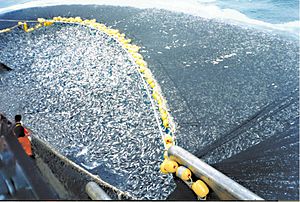
Fish Forever

We'll round out our preliminary coverage of oceanic geopolitics with this lesson (game included).


31 July 2013

Games, simulations, and the new school year.

Ask any student the following question; would you prefer to start the year with a lecture or playing a game? I'd wager the that nearly all learners would choose to spend their time with the game. As a younger student, I recall only being able to play in class once all of the curriculum was "done", usually at the end of the school year. Of course, we know that learners of all stripes acquire, apply, synthesize, and communicate knowledge through participation in games and simulations. As a result, there's a strong case to be made to embed complex critical thinking simulations and games right from the outset of the school year.

I'm currently putting the final touches on all of my lesson plans for the first term of both years of IB Global Politics. Here's a partial list of the games and simulations the students and I will be playing in the first thirteen weeks:

Against All Odds; Fish Forever; Half the Sky; Malaria in Wanzuzu; Model United Nations; Pandemic; Prisoner's Dilemma; Rock-Paper-Scissors-Lizard-Spock; Rushing River Cleanup; Survival; Tic-Tac-Toe; The Walking Dead

To say that I'm completely nerded out by all of this is an understatement; I can't (hardly) wait for school to start on the 26th!

25 June 2013

Games, Learning, and Autism Spectrum Disorders

As a parent of an HFASD child, I'm constantly attuned to news on interesting research programs that focus on socialization and learning for children on the Autism spectrum. I know from practical experience that non-competitive games are a great way for my HFASD daughter to engage in exploratory learning environments at her own pace. As the BBC noted yesterday researchers at the University of East Anglia have developed virtual reality scenario-based environments for people who suffer from anxiety. The idea is that allowing individuals who suffer from social anxiety to experiment in unfamiliar or stressful virtual environments will allow them to practice their social skills, debrief and reflect on their experiences, and plan out strategies in preparation for similar situations in the future. I'm also curious about the extent to which HFASD learners participate in simulations and decision-making games for their own enjoyment. Perhaps there's another research question & project to explore once I finish with my dissertation.

20 June 2013

Using Game-based Learning to Understand Violence Against Women

First off, the Half the Sky Movement is nothing short of amazing. Kristoff and Wu Dunn have constructed a complete and relevant learning environment by polyangulating different content and experiential resources; text, film (Part 1 and Part 2), and game. Since the film and game weren't ready for our GLOPO class until last fall, we've pushed off the study of Human Rights until this coming academic year. The delay in facilitating this unit (Human Rights) has been a difficult one. Over the past decade, I've taught world politics through the study of armed conflict and International Humanitarian Law (IHL). My classroom experience and feedback from students over the years has taught me that there is no better way for students to learn about these complex issues than to do so through games and simulations. As such, its been a real exercise in intellectual patience to keep our class from diving in to the study of human rights; playing and simulating all along the way. 


As if to highlight the necessity and urgency for students to learn about the geopolitical importance of IHL-especially as it relates to women-a number of news items crossed all sorts of media outlets today. Writing in The Atlantic, Olga Khazan documents the states who are most complicit in the latest incarnation of global slavery; that of Human Trafficking. Drawing on annual reports from Human Rights Watch and the United States Department of State, Khazan notes the ways in which women and girls are victimized at various points in the trafficking process. While the BBC notes that the governments of Russia and China objected to the State Department's assessment of the state of trafficking inside their respective societies, one does wonder how much more officials in Beijing and Moscow can or will do to combat the trafficking of women going forward. 
 

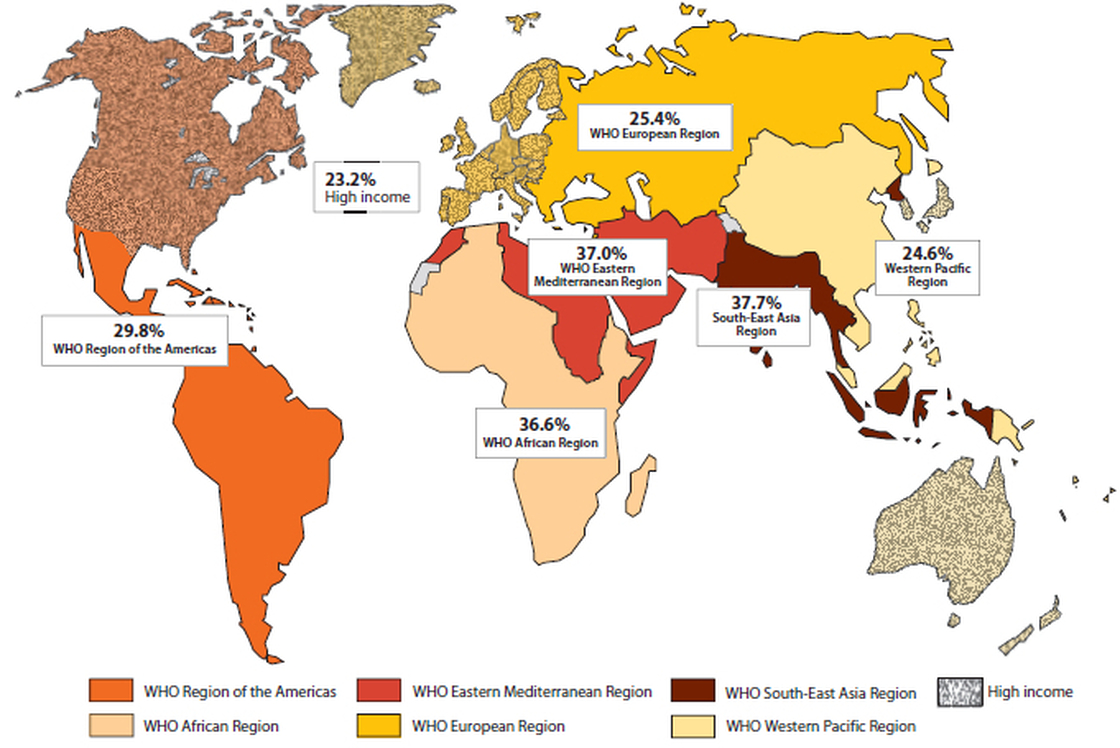
As heard today on NPR, the World Health Organization (WHO) has documented an extensive account of violence against women around the world. The statistics could not be clearer; more than one-third (35%) of all women around the world have been raped or physically abused. The consequences of this violence is pervasive and disturbing, and yet the WHO has made their analysis of this significant issue clear and accessible for a wide range of learners. On the policy side, it is interesting to consider the two maps above. On the left, the State Department's assessment of the problem of human trafficking. On the right, the prevalence of rape and physical abuse against women as documented by the WHO. Clearly, there are parts of the world where being a woman can be a tremendously difficult and dangerous existence. As cosmopolitans, we must continue to do more to facilitate learning about the hideousness of structural violence against women and girls. 


19 June 2013

Game-based Learning, Human Rights, and Displaced Persons

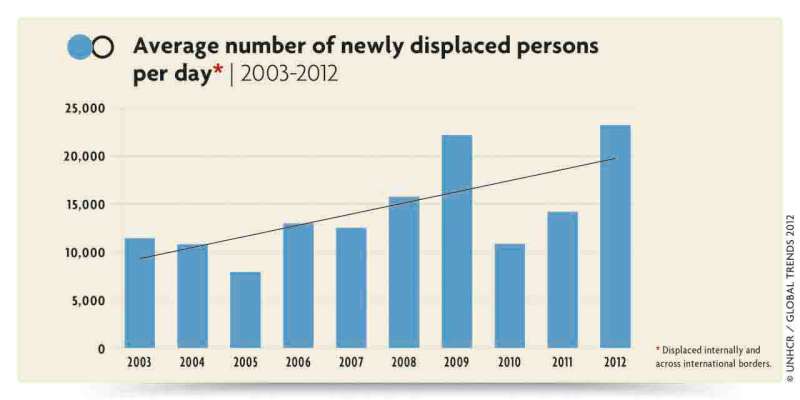
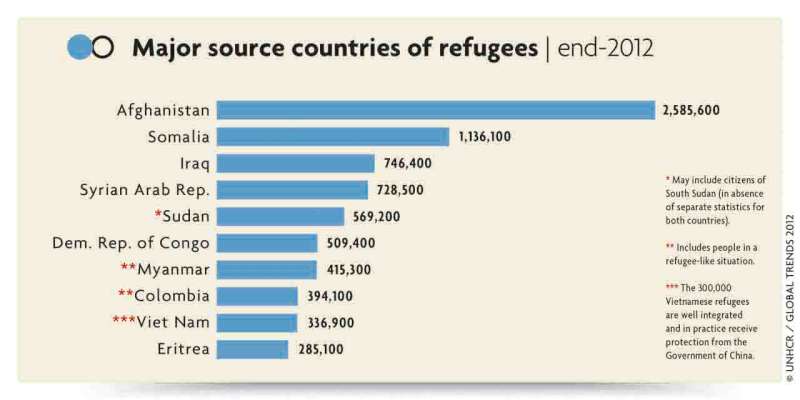
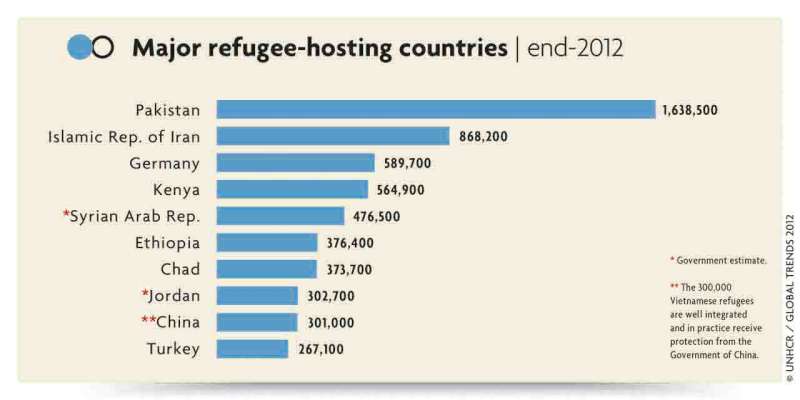
The UNHCR released a report this morning, highlighting the increasingly desperate state of affairs for refugees and IDPs around the world. Specifically, the UNHCR documented some 45,200,000 persons who are living outside of their homes as a result of forced migration; and these numbers do not count those displaced by the violence in Syria. Armed conflict remains the most common reason for people to flee their homes. In addition, the UNHCR report documents that developing countries are increasingly hosting the majority of refugees around the world. This fact has consequences for world politics insofar that these countries are less financially- and institutionally-equipped to support major flows of refugees than developed countries. Such situations can also exacerbate existing economic and identity-based cleavages in these societies, lessening the potential for sustained socioeconomic development and increasing the likelihood for intrastate violence amongst different groups.
  

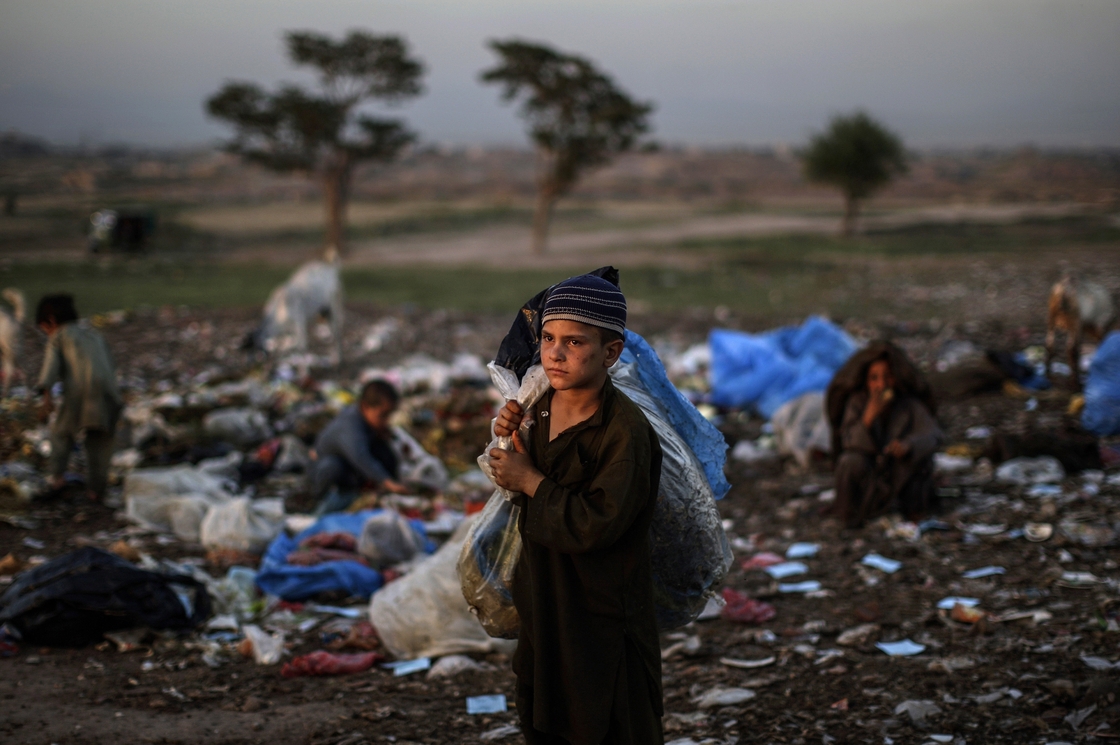
[updated] The Smithsonian posted this very cool interactive map on the 50 most populated refugee camps around the world. NPR has also picked up this story today. There's nothing new in the story content, but NPR's photo of children scavenging for food and resources in a garbage dump is haunting:


While graphs and pictures certainly present one side of the refugee and IDP issue, they are not simply enough to truly appreciate the plight of displaced persons around the world. Thankfully, there are some great games that allow learners of all varieties to simulate the experiences of refugees and IDPs so that they may better understand the complex set of circumstances that can lead individuals to flee their home country. My favorite of late is Against All Odds. Published by the UN Regional Information Centre for Western Europe (UNRIC), the game positions learners in a variety of simulated environments and circumstances in a hypothetical country. The UNRIC also hosts a broad range of resources to support & provide context for game-based learning. Against All Odds will be one of several games (Half the Sky, Darfur is Dying) our GLOPO 2 class will be engaging in the fall. 


05 June 2013

Learning through simulations-student's views

My dissertation will examine the way that students appreciate the IB Global Politics syllabus topics through their participation in classroom games and simulations. As a bit of "research reconnaissance," I've posed selected questions to my students about how they have learned through some of the scenarios we've worked through in class this year. As a part of their 3rd term survey, the GLOPO students were tasked with evaluating the relevance of the different games and simulations from the term. Using a 4-point scale, each of the 16 students were asked to rate their experience in each of the four simulations with reference to the following prompt, The following simulations enhanced my understanding of global politics this term.


These results indicate that, on balance, students agreed that simulations enhanced their understanding of the material we covered in IB Global Politics this term. A majority indicated that the agree strongly with this assertion. Indeed, when combined with the agree somewhat responses, 76% of the students' responses had a favorable view of participating in simulations with respect to their learning.


Breaking the survey responses down a little deeper; the students participated in two different types of simulations this term. "Survival" and "Rushing River Cleanup" were generalized simulation designed to teach and assess participants' decision making skills. Both required the students to think strategically and tactically in a hypothetical context. Neither simulation required research on real-world, political topics or cases. While the favorable perception of simulation is still present, there is a relatively even perceptual split amongst students who agree strongly and agree somewhat as to the utility of these simulations in learning about global politics.


The other type of simulations were full-day simulations designed to replicate real events in world politics. Students participated in a single-day, mock Security Council as a part of Lynn University's High School Model United Nations simulation. The other simulation was conducted in-house as a full-day, peace conference centered around the Democratic Republic of Congo. Students overwhelmingly indicated that agree strongly best reflected their perception of these simulations as related to learning world politics. Although 38% of the students did not participate in the Model UN simulation due to conflicting activities, it is clear that those who participated felt that this was a useful learning experience.   Student responses to the DRC simulation offer the most compelling evidence that research-oriented, complex simulations are overwhelmingly appreciated by student participants. This is also supported by the qualitative evidence in the student commentary below.


These results set up some interesting research questions and hypotheses for future inquiry; do student perceptions of the utility of of simulations and games vary by type? Is there variation of usefulness of particular simulations within these categories? Posing a hypothetical null hypothesis; students see no difference in the type of simulation as a means to understand the IB Global Politics syllabus topics. 

A second way to look at the question of how students appreciate the study of global politics through their participation in games and simulations is to offer them the opportunity to write or comment on the topic. While I did not develop an exhaustive interview script for the students, they were asked to address the following prompt, What other thoughts or commentary would you like to make regarding the simulations from this term's work? Their responses-listed below-offer some keen insights into the specific perceptions of the role of simulations in their learning. These responses also suggest that constructing a way of capturing and analyzing student responses-most likely through content analysis-can offer a more nuanced perspective on this topic as I finalize data collection methods for my dissertation. Please feel free to read through and comment on the unedited student responses below.

  • I feel like the most important one was the DRC simulation because you harnessed the inherent competitiveness and superiority complexes of our class and turned them into a useful political thing where we all learned something about theory and the practicality of it as well as the overwhelming difficulty of resolution
  • I liked the simulations
  • I prepared for Lynn MUN but was not able to participate because I took part in the Mach of the Living.  The survival simulation, in my opinion, would have been more appropriately placed in the units concerning IR theory or , because of the individual groups coming to their own opinions and then the groups working together.  The choices and compromises made model a negotiation process.  In my opinion it would have been ideal to take part in this simulation during the Iran unit to further explore negotiations with hostile states and organizations with different goals. Unfortunately I missed Rushing River for the March as well and I missed the DRC simulation for a family issue. However, I view the March as a simulation.  I witnessed the horrors of the Holocaust by actually going to the places where millions of lives were taken.  I spoke to survivors about their hardships and explored political implications such as sovereignty, human rights, armed conflict, and finally the global community defining genocide.
  • I didn't really think that the survival simulation taught me a lot about global politics.  It made us work together and come to agreements in our small groups and would have done the same thing when the whole class came together to make a master list, but someone googled the answers so it didn't really work.  I had the play during LUMUN...I thought the Rushing River simulation was really effective because it put us in actual negotiating situations where we had to compromise and experience betrayal and such.  I thought the DRC simulation was the best one because it was the most fun and also the most like real life with the debates and meetings and such.
  • They were extremely helpful and i felt well prepared for them.
  • The simulations were key in helping me grasp the material presented. They not only helped me understand what was discussed in class, but helped a lot in doing my final IA this term. 
  • The simulations were the most effective and successful was of enhancing my understanding of global politics.
  • All enhanced my understanding and demonstrated obstacles to resolving internal conflicts. 
  • the simulations were a great experience that further improved my understanding of the class
  • Applying the theory with R2P at Lynn Model UN and credible commitment theory at the DCR simulation was helpful and enjoyable. They helped illustrate the difficulties of putting abstractions into practice. I sincerely felt that the simulations had pragmatic applications in that they helped prepare me for the real world; that's something I can't say about most of my K-12 experiences. 
  • I found the Iran simulation very helpful in both understanding what was going on in Iran, but also what steps would be taken in deciding whether or not to attack and the results of an attack on the rest of the world. It really tied in everything we read and made it "real", which for me was great because I tend to learn better by visualizing things, rather than solely basing my understanding on reading. 
  • Survival-I really enjoyed this exercise. I actually think the most valuable part of this was at the end during our discussion over which items were best, for our arguments forced us to support our facts and fight for what we believed in, simulation a peace-making discussion. Lynn MUN-Because of the play, I was not able to actually go to the MUN itself. I did help my group prepare, but that only does so much. I definitely want to go to a MUN next year; they seem like fun! Rushing River Cleanup-Originally, the reason I was going to rate this lower was because I did not have as much of a hand as I wanted to in my group. This is because I was with Max and Michael, and obviously they took omnipotent control. However, I did gain valuable insight during our classroom discussion at the end and learned the importance of cooperation (and secret meetings). This experience also prepared me for the DRC simulation, for I used what I learned about cooperation (and other classmates) during this exercise to help me get my position across as South Africa. DRC-BIG BIG yes to this one. This was probably one of my favorite days of this entire year, not just in Global Politics. I could go on and on about how valuable this day was overall, but I'll just sum it up by saying that I learned a tremendous amount about not only the foreign affairs in the DRC, but the many elements of conflict as well. Looking back, I now realize how much the first three simulations helped us for the final DRC one.
  • I really enjoyed all of the simulations we attended or did in class. I don't know if it would be possible but more of these simulations would be great because I find that I learn a lot from participating in these simulations. I also enjoy them a lot too.
  • The simulations were key in building my interest for the course. I enjoyed MUN and DRC simulation. In the future, I hope to take part in more MUNs. I believe that the simulations are the core to this particular course.
  • I have realized that this is absolutely the way that I learn best. I was uncomfortable with the idea at first but not anymore. By the end of the term I was actually looking forward to the DRC simulation both when I was outside and inside of school. I wish that my other teacher's followed suit in using simulations. 

17 May 2013

Using simulations to understand global politics: The Democratic Republic of Congo

This past Tuesday, our IB Global Politics (GLOPO) class completed the final, major simulation in our study of Peace and Conflict. This simulation was by far our most complex of the year; a multi-party, various-actor, day-long negotiation covering four broad topics centered on ending violence in the Democratic Republic of Congo (DRC). Students worked in either pairs or as solitary representatives of the DRC, Rwanda, Zimbabwe, South Africa, United States, Belgium, UN (MONUSCO), the African Union, Congo Liberation Movement (MLC), and Rally for Congolese Democracy (RCD). The basic framework for the simulation was published by the  Public International Law and Policy Group based in Washington D.C. As outlined in their planning document, the students had nearly complete control over the agenda, rules, events, and other dynamics of the simulation.


One of the features of this simulation is that there are no rules, save for the timetable for negotiations. Students were implicitly tasked with defining the parameters of their negotiations. This absence of specific rule sets initially led to near-bedlam in the opening plenary session. As the students enthusiastically represented their country, group, or organization's interests, they found themselves operating in a context where none of them could successfully articulate their points or reach consensus with potential allies. As an instructor, it was wonderful to sit back and watch students wrestle with predicaments of their own making. More importantly, it was inspiring to see the delegates learn from their failures and construct rules for dialoge and relations amongst all of the parties so that more substantive negotiations could occur.


This simulation was an opportunity for students to apply two broad areas of academic literature that they've encountered in this unit. As I've previously written, the GLOPO students have read a good deal on the causes, practices, effects, and solutions to ethnic civil wars. In addition, students took the opportunity to read both primary and secondary resources on the DRC; specifically Gambino (2008) from the Council on Foreign Relations. The fact that students came prepared to the simulation with binders full of UN documents, maps, source material, and then referenced these in their speeches, negotiations, and written resolutions is a testament to how students see the value of problem- and simulation-based learning. I would also argue that this is a preferred pedagogical approach to that of lecture- and worksheet-based learning that is still found in far too many classrooms today. 


Another important facet of the simulation was the way in which students came to appreciate concepts of power and sovereignty, along with the more obvious concepts of peace, conflict, and conflict resolution. As each/pair of students represented a different variety of global actor-states, IOs, non-state actors-their challenge was to at once understand how much influence they had based on their power (hard, soft) capabilities, as well as their individual abilities to set the agenda, negotiate, and to otherwise pursue their chosen interests. For example, students representing the African Union quickly made the correct recognition that their ability to influence the process towards peace negotiations was limited by nearly every party in the negotiation. Consequently, they chose to look to MONUSCO and South Africa's leadership as a way to orient their negotiations. In contrast, student representing non-state actors such as the MLC and RCD found that they could ignore or even challenge seemingly-more powerful governments and IOs because of their perceived power and influence on the ground in the provinces of North and South Kivu. In moments that would make the late E.H. Carr, George Kennan, Hans Morgenthau, Hedley Bull, and (recently) Kenneth Waltz smile from the great beyond, the power disparities and dynamics that the students had to deal with made negotiations particularly poignant as they came to understand that their ideas alone did not always lead to the achievement of their desired outcome.


As an instructor, my favorite part of an simulation is debriefing. After the intensity of discussion, debate, and tribulations of a game or simulation, debriefing offers students the opportunity to reflect and speak about their experiences while it is fresh in their minds. In this circumstance, the students offered an arrangement of ideas to prompts relating to their goals, how other players participated in the process, and even to the nature of the outcomes themselves. This variety was contingent on factors such as their own knowledge of world politics and the position they held during the simulation; and yet each student's rejoinder was sufficiently supported by their experiences. For those of us in the International Baccalaureate world, this "TOK moment" was just another reminder of how knowledge is contextualized, particularly when studying complex phenomena. 


Finally, it certainly goes without saying that no grades were ever a part of this endeavor. Students received feedback throughout the research and planning process; although at this point in the year, it's more a matter of getting out of the way of students so that they can succeed. I also provided feedback during the simulation (minimal) and the debriefing (more substantive). Again, my task as the instructor is to coach and to support students in the learning process   Obviously, constructing a ROLE requires building trust and rapport with students, along with the relevant and challenging resources, scenarios, and other environmental factors that make for a dynamic and meaningful class experience. That said, this is another example of what Dan Ariely sees as the formula for motivation and meaningful work; payment + meaning + creation + challenge + ownership + pride + identity. Providing students with the opportunity to embrace all of these rewards is what made this simulation so successful; I couldn't be more proud of our work.  

01 May 2013

Simulation: Rushing River Cleanup

The Rushing River Cleanup simulation is a thee-party, single-issue negotiation over the cost of complying with government regulations. We ran this simulation in one 90-minute period, with only about 60 minutes for the actual simulation. After dividing the class into three groups by "Acme's," "Borland's." and "Chemco's" groups had time to prepare their negotiation strategis, tactics and talking points before embarking in negotiations. While the distribution of the fictional government resources is explicated in the game itself, the challenge for students lies in negotiating how to divide the expected payoff, given their company's contribution to the project and water output that must be sanitized by the project. There were plenty of opportunities to test out some of our PD strategies (Nice, Retaliatory, Forgiving) during the negotiations as there could only be one outcome/distribution of funds, and that teams can choose to either cooperate with two other parties or to defect against one and cooperate with the other. Given that agreements between two parties had a finite time limit, this also meant that teams had to make decisions in a more stressful environment than they normally would have had to work with. We also used two debriefing exercises for the simulation. The in class debrief was quite contentious as one team was still smarting from having lost a deal right at the deadline and then a set of survey questions to which students replied to via Google Docs. Both were insightful as students had the opportunity to reflect on how their strategies and tactics worked out in the simulation.